
| YEAR | 2023 |
| LOCATION | Casamance – Senegal |
| TYPOLOGY | Education |
| AREA | 662.00 M² |
| CLIENT | Balouo Salo |
| AUTHORS | 404 ARQUITECTURA |
| TEAM | Israel Ascarruz Diego Bullón Diego Hernández Alonso Melgar Claudia Romero |
| CINEMATOGRAPHY | Alonso Castillo (script) Gonzalo Vera Tudela (direction) |
| STATUS | Delivered |
| RECOGNITIONS | Honourable Mention |
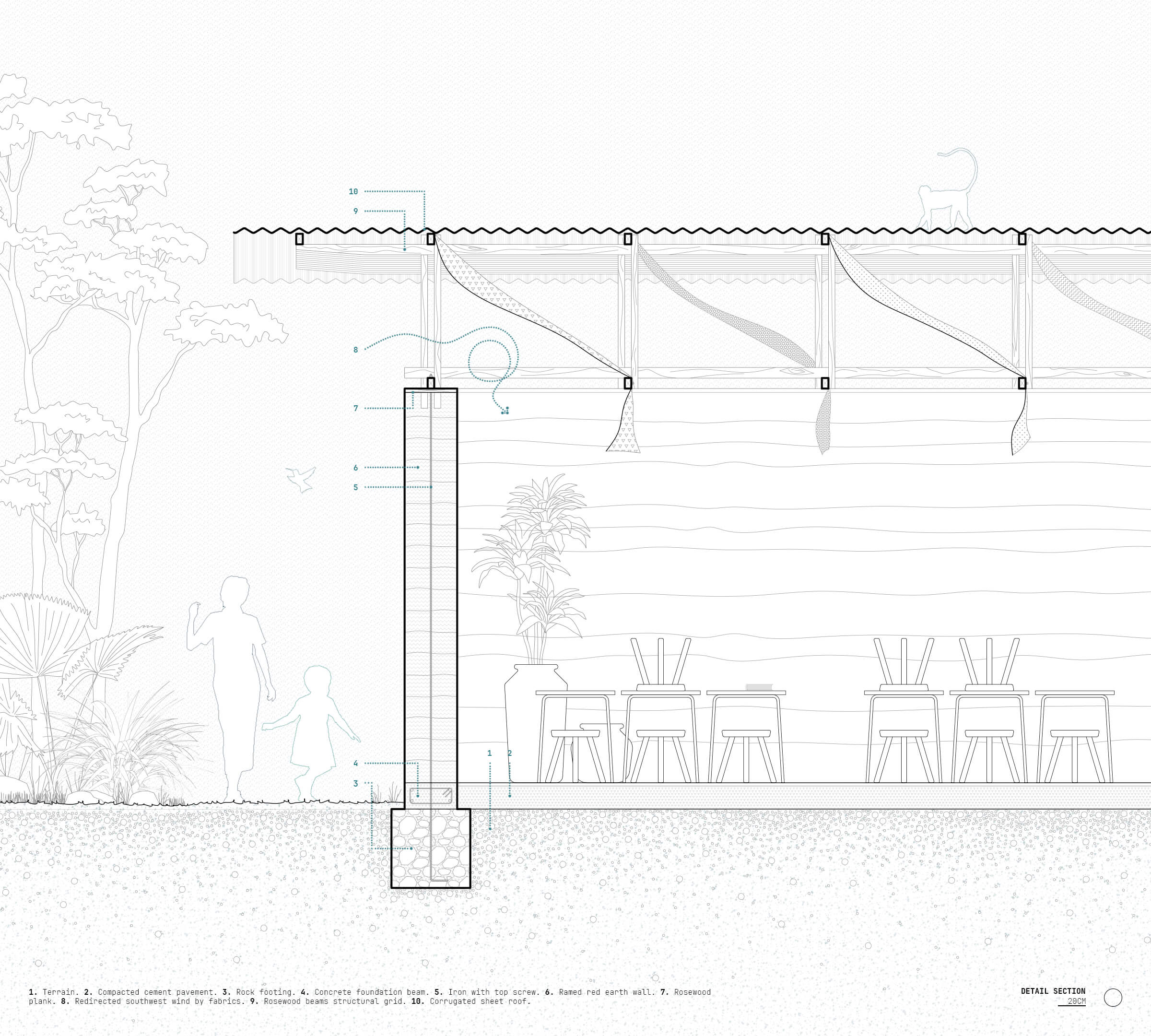
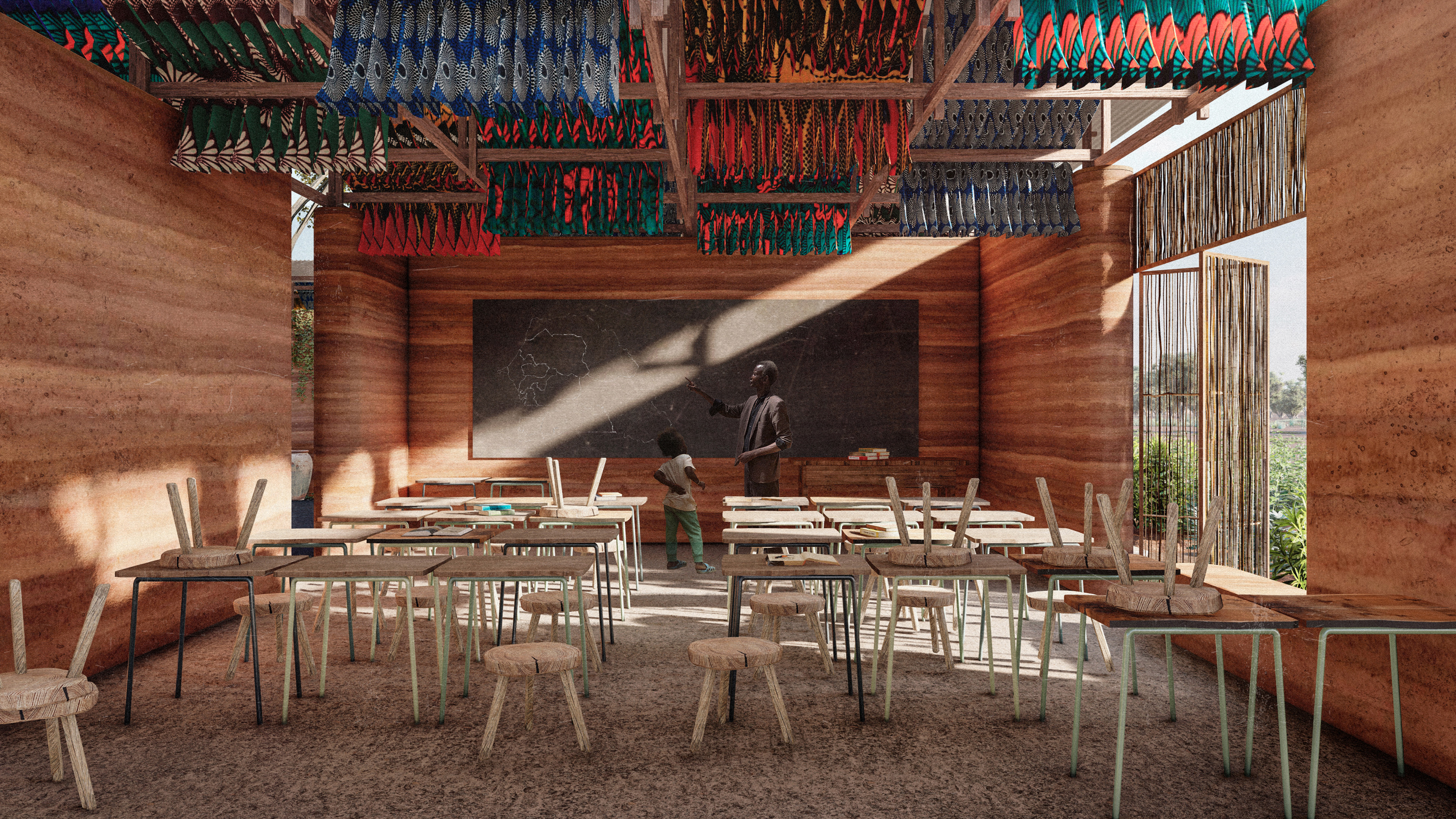
In the social and climatic context of Casamance, a school cannot be understood solely as a place of learning. It must be, above all, a safe space for children and, at the same time, a useful piece of infrastructure for the entire community. Therefore, rather than simply accommodating a conventional educational program, the proposal seeks to offer a self-sufficient tool capable of integrating learning, care, production, and resilience. The central idea is that the building should transcend its basic functions and become a living organism, one that teaches through its own operation. Between the central volume and the interior courtyard, five programmatic nodes activate this notion of a self-sufficient machine: (1) a rainwater harvesting well —placed along the roof edge to maximize collection— linked to the laboratory so that filtration processes can be incorporated into learning; (2) a soil-preparation area for mixing earth, compost and fertilizer, also adjacent to the laboratory to connect cultivation and education; (3) a garden and compost zone associated with the dining area, conceived both as a source of food and as a model of self-sustainability; (4) an outdoor dining space that extends the main dining room and also serves as an area for play, gatherings or community events; and (5) a dry toilet that closes the food cycle through the biological production of fertilizer... READ MORE.. READ MORE.. READ MORE Based on these principles, the program is distributed into three main pieces: two orthogonal bars that house the classrooms and define the project’s perimeter, and a third central piece —of fluid geometry— that holds the remaining spaces: the “amoeba”. This volume expands and contracts strategically to generate courtyards, entrances and transitional spaces; it is through this piece that the building comes to life, enabling the new proposed activities. A fourth piece complements the system: the roof. Conceived as a timber grid, it not only provides shade but also organizes movement throughout the project and dissolves the boundary between interior and exterior. Classrooms can extend into the gardens, the dining room can become a plaza, and the courtyards can adapt to multiple uses. In this way, the proposal embraces versatility and flexibility as tools to foster community life. Inspired by the passive ventilation towers documented by Bernard Rudofsky in Architecture Without Architects, the roof integrates Senegalese fabrics stretched over the grid to enable passive cooling. Positioned diagonally, they capture the fresh southwesterly winds from the Atlantic and help deflect the Harmattan, the hot, dry wind that blows from the Sahara. The result is an air chamber that keeps interior spaces cool without relying on mechanical systems. Material selection prioritizes local, durable and low-cost resources. The project is built with three essential elements: slab, wall and roof. The floor uses a compacted cement-and-sand mixture, common in the region and highly resistant. The walls are constructed from rammed red earth placed over stone foundations and reinforced concrete plinths, strengthened by a vertical metal structure anchored to the footing and bolted to a timber top plate. This material —abundant, simple and thermally efficient— becomes the constructive backbone of the building. The roof is supported by palorrosa beams, a dense and resilient local wood that enables the formation of a structural grid. Corrugated metal sheets are installed above to withstand heavy rains, while stretched fabrics regulate the microclimate and complete the passive ventilation system. To facilitate construction with local labor, the building is laid out on a 1.5 × 1.5 meter grid, allowing for repetitive modules and simplifying assembly without oversized elements. Any additional interior partitions can be created using fabric curtains hung from the structural grid. Optionally, wooden panels with cane frames (0.75 × 2.4 m) may be installed to close openings when needed. Finally, the site selection was based on a territorial analysis integrating three variables: population density, proximity to the national road N6 (5 km, the maximum walkable distance), and the presence of local paths. With these criteria, an optimal area was identified between Darsilam and Sedioudi, combining accessibility, natural landscape and potential for immediate social impact. |
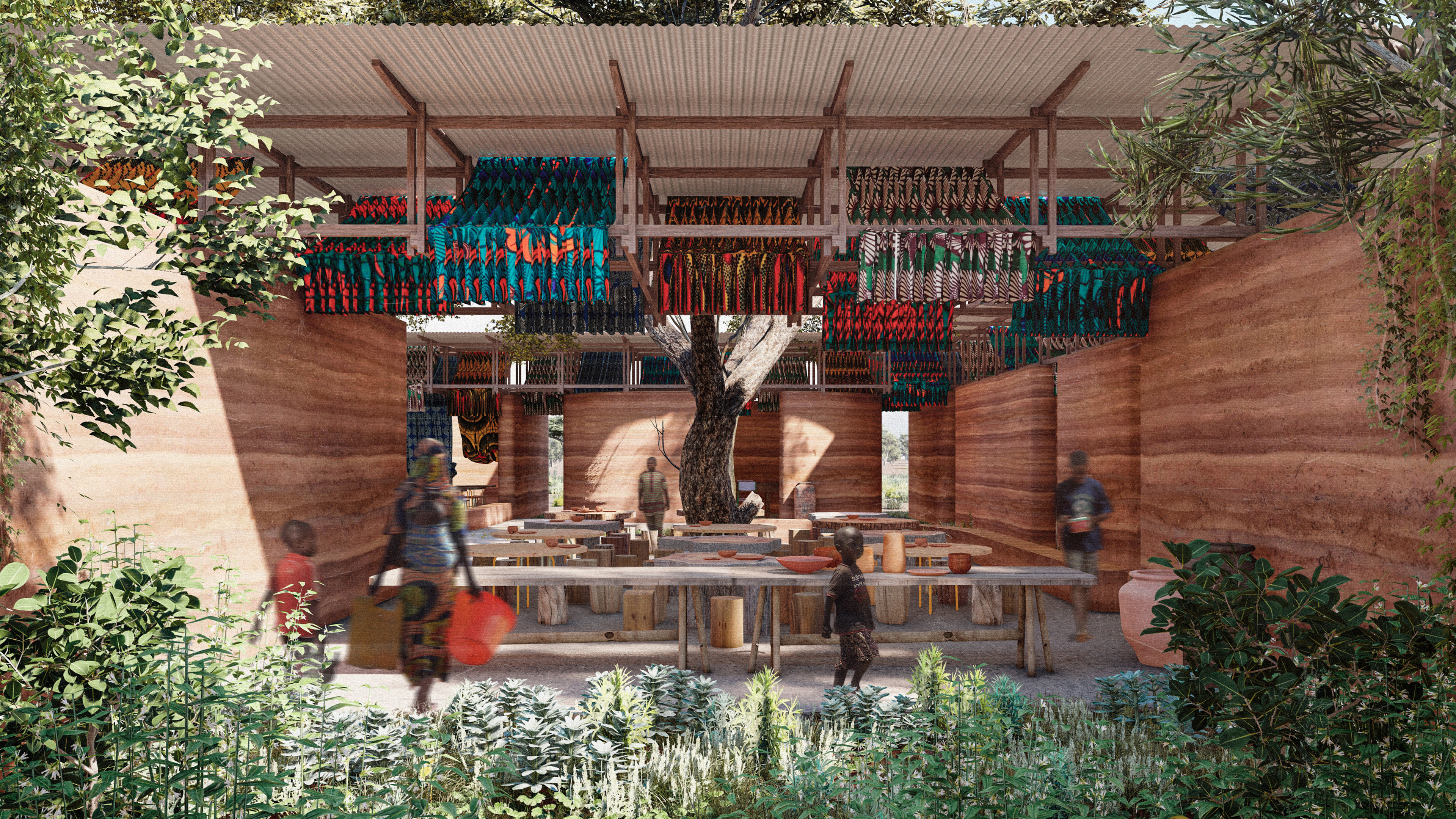
In the social and climatic context of Casamance, a school cannot be understood solely as a place of learning. It must be, above all, a safe space for children and, at the same time, a useful piece of infrastructure for the entire community. Therefore, rather than simply accommodating a conventional educational program, the proposal seeks to offer a self-sufficient tool capable of integrating learning, care, production, and resilience.
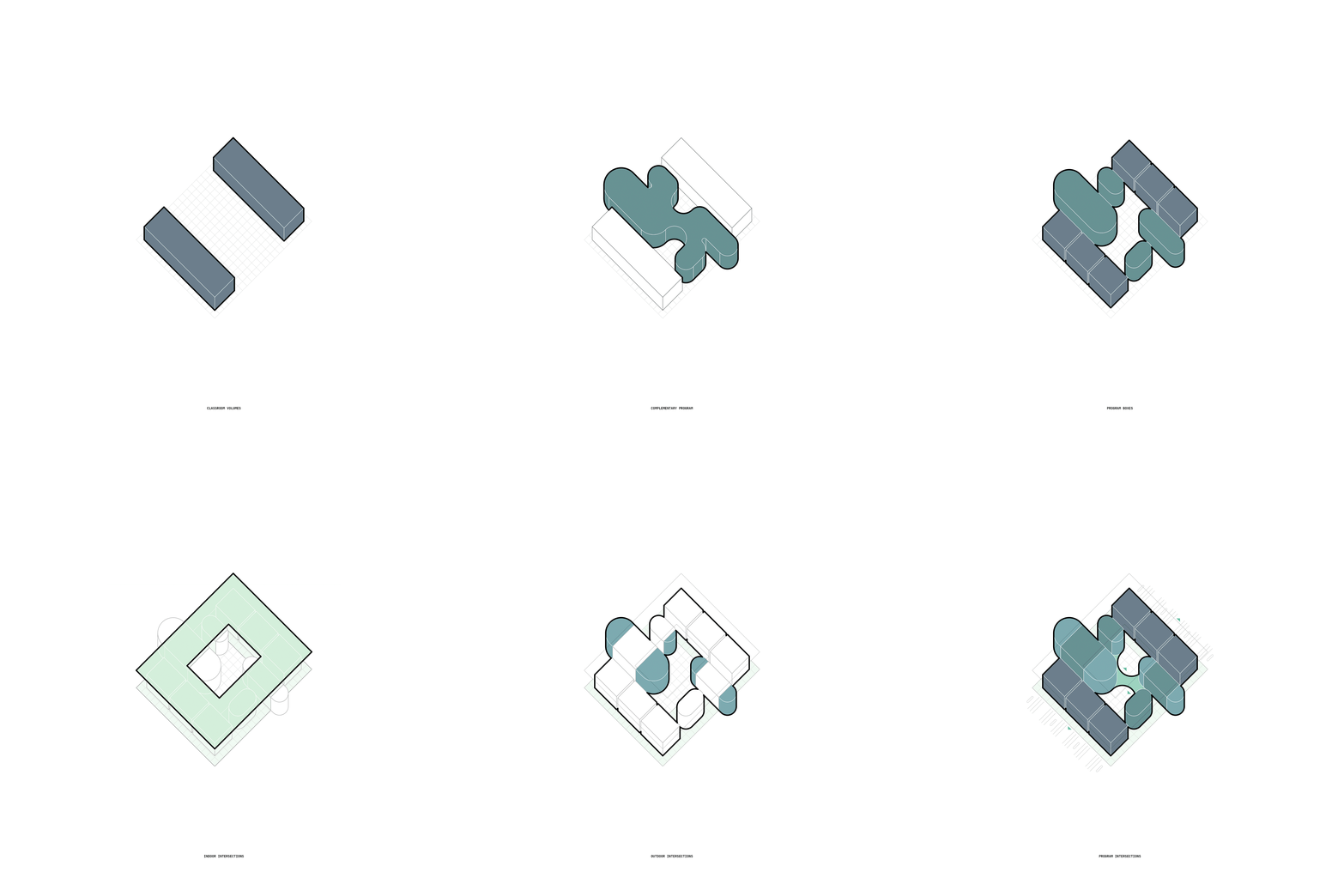
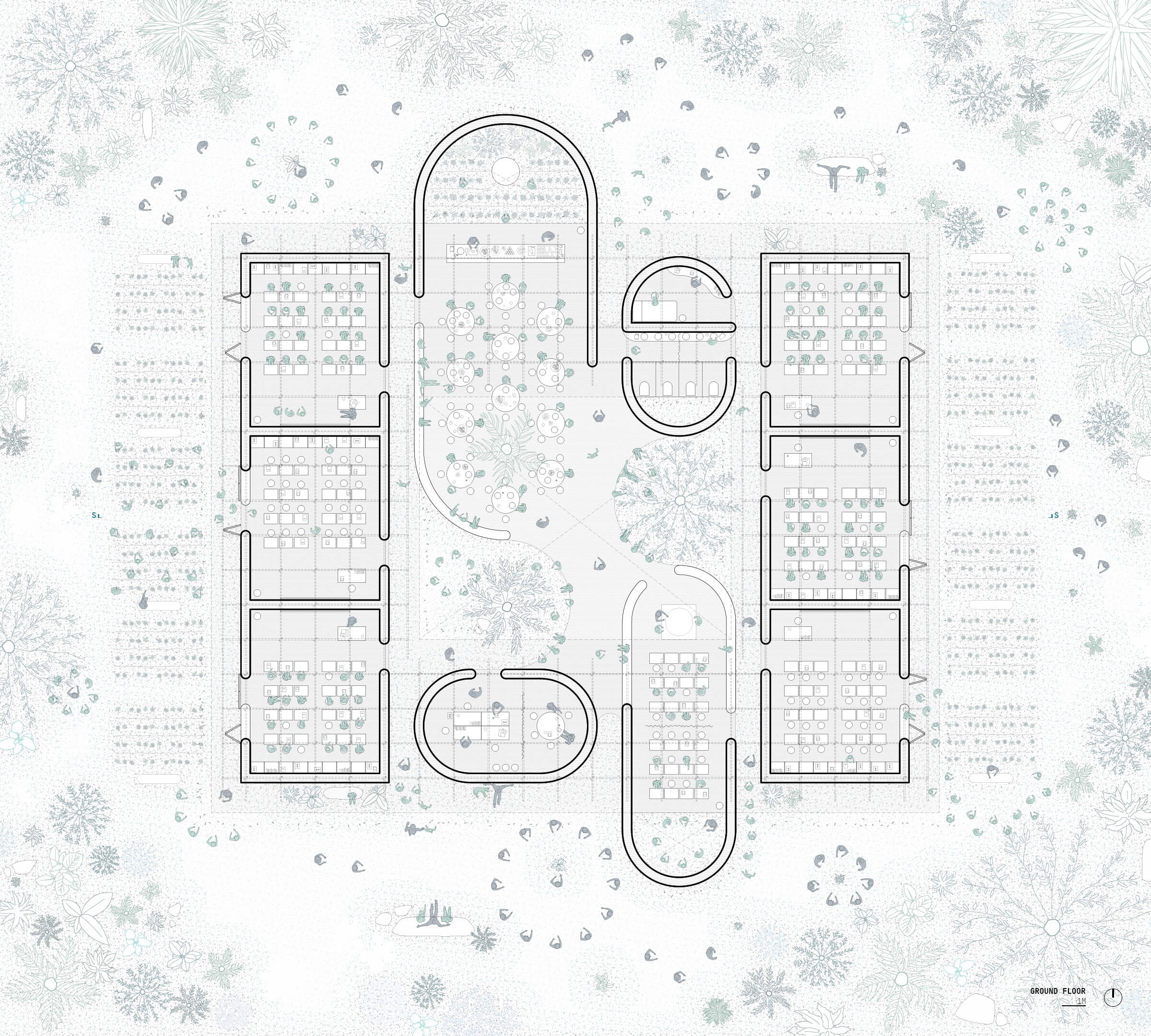
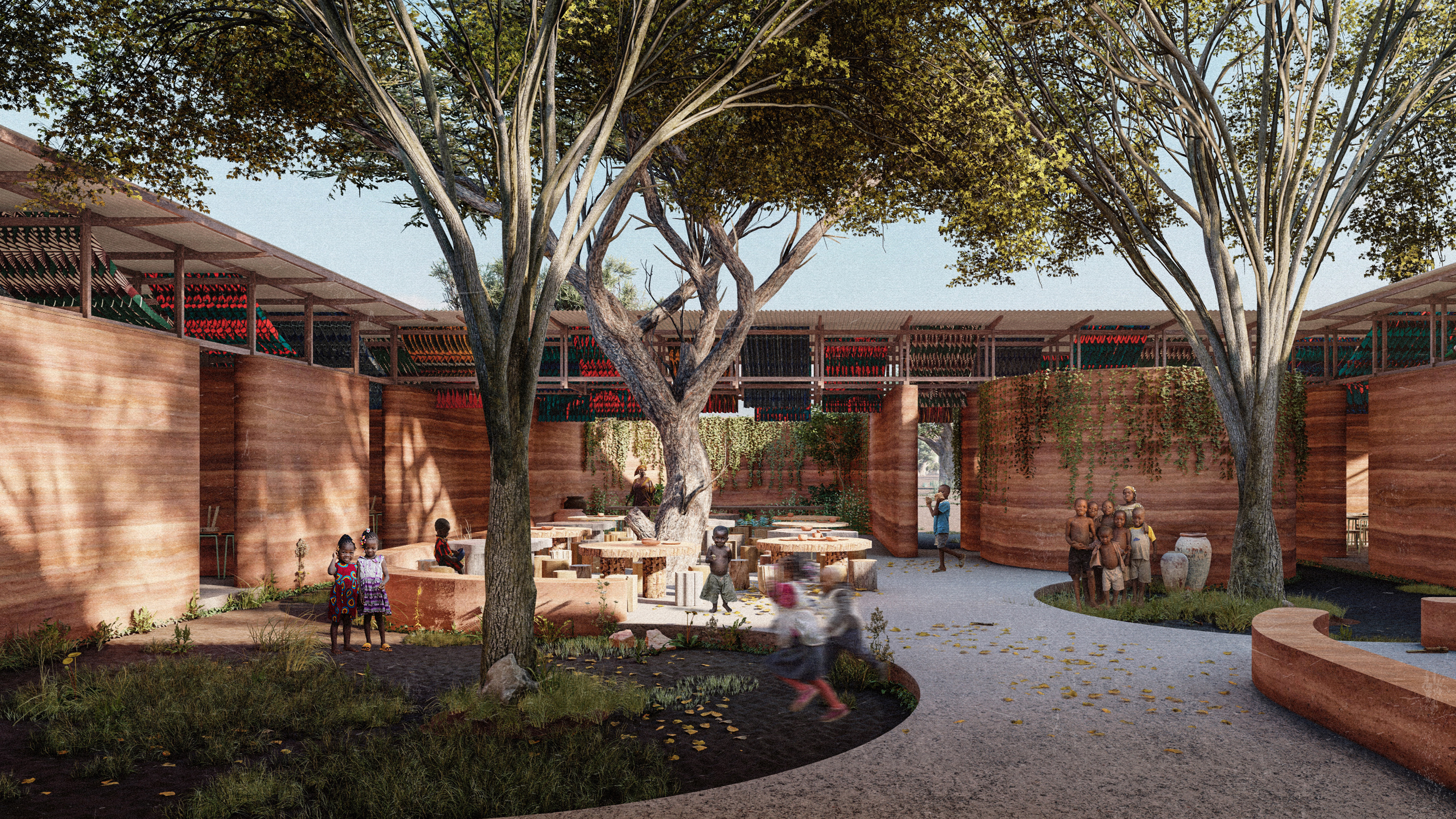
The central idea is that the building should transcend its basic functions and become a living organism, one that teaches through its own operation. Between the central volume and the interior courtyard, five programmatic nodes activate this notion of a self-sufficient machine: (1) a rainwater harvesting well —placed along the roof edge to maximize collection— linked to the laboratory so that filtration processes can be incorporated into learning; (2) a soil-preparation area for mixing earth, compost and fertilizer, also adjacent to the laboratory to connect cultivation and education; (3) a garden and compost zone associated with the dining area, conceived both as a source of food and as a model of self-sustainability; (4) an outdoor dining space that extends the main dining room and also serves as an area for play, gatherings or community events; and (5) a dry toilet that closes the food cycle through the biological production of fertilizer... READ MORE.. READ MORE.. READ MORE
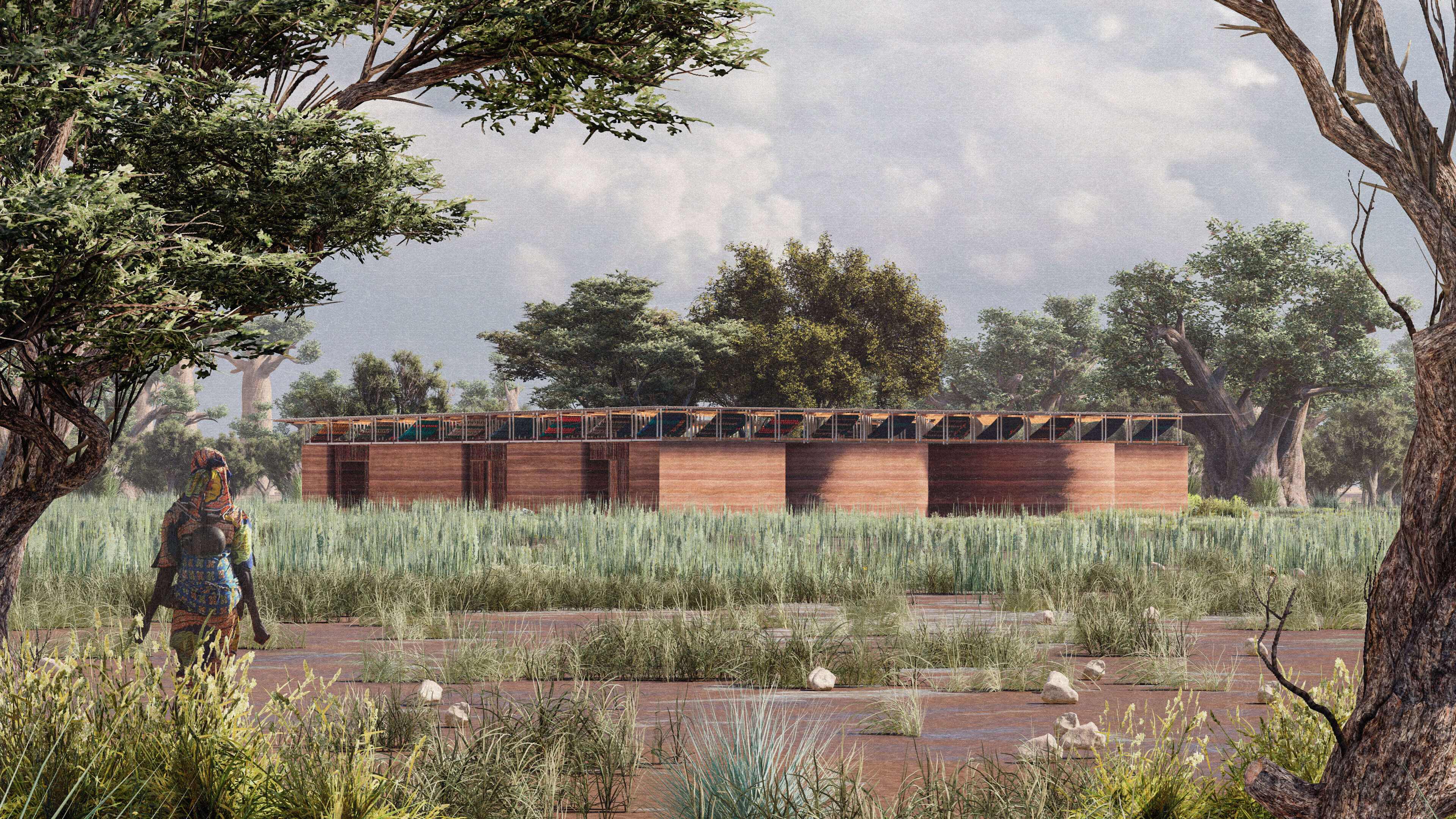
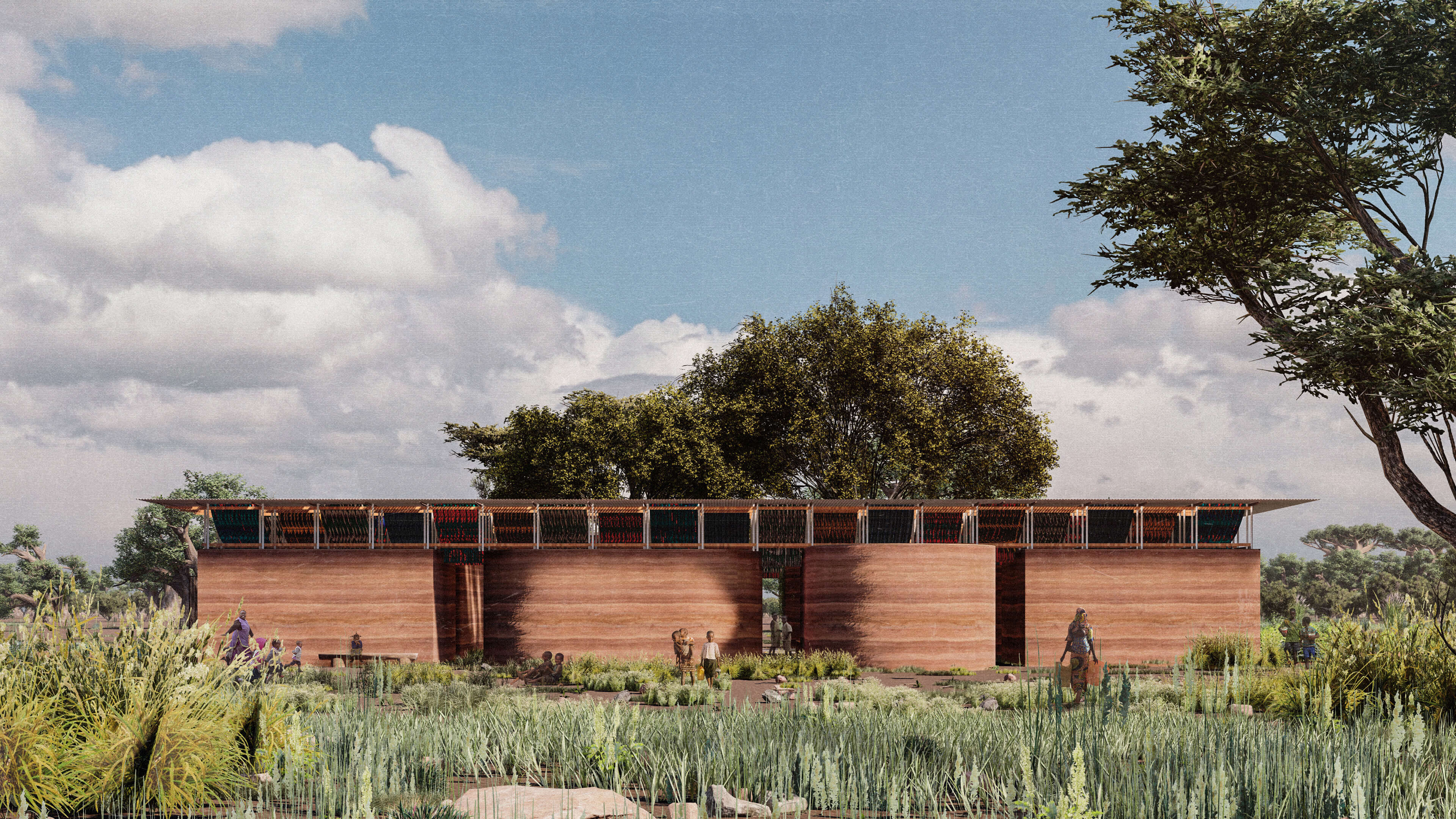
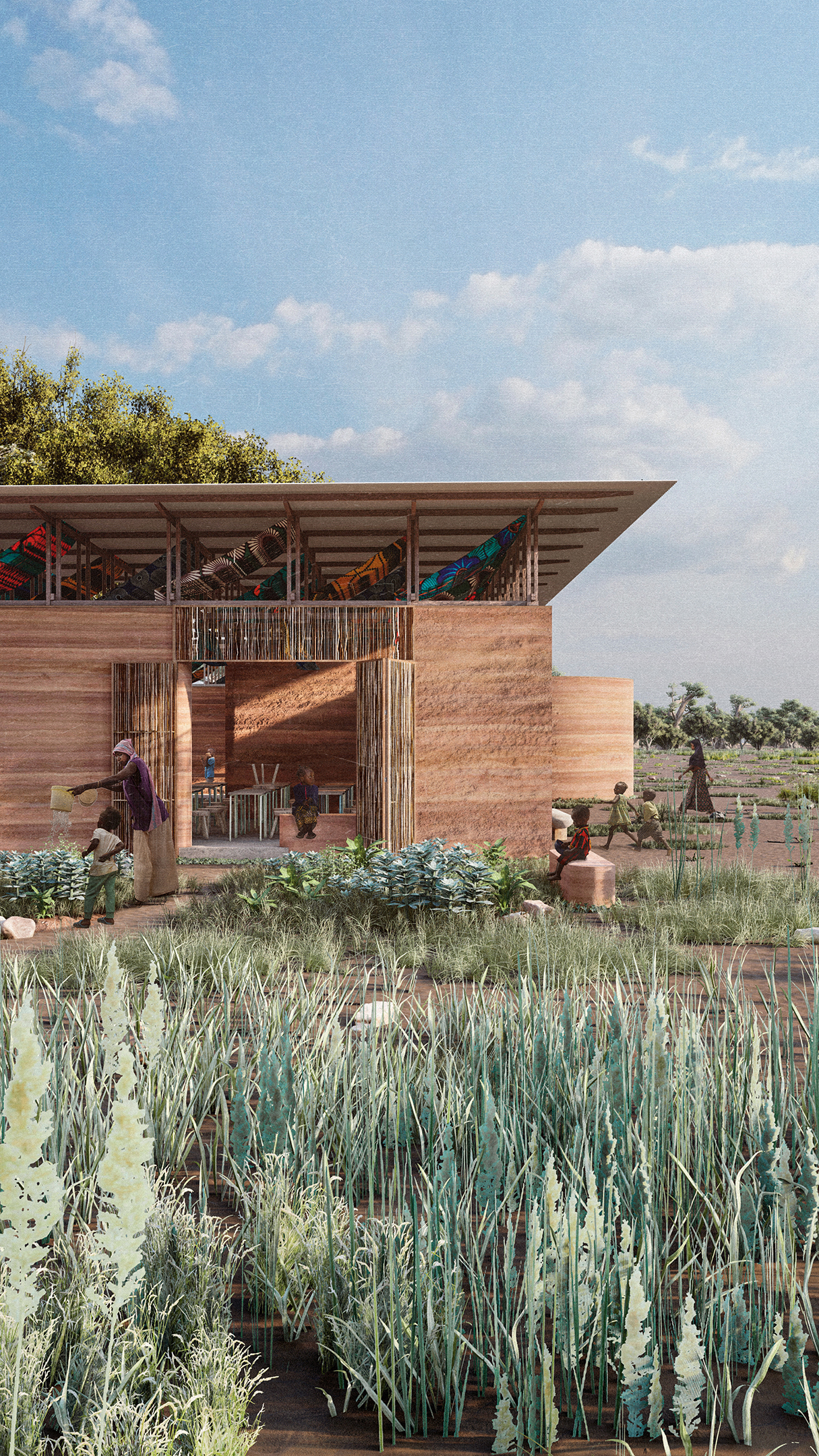
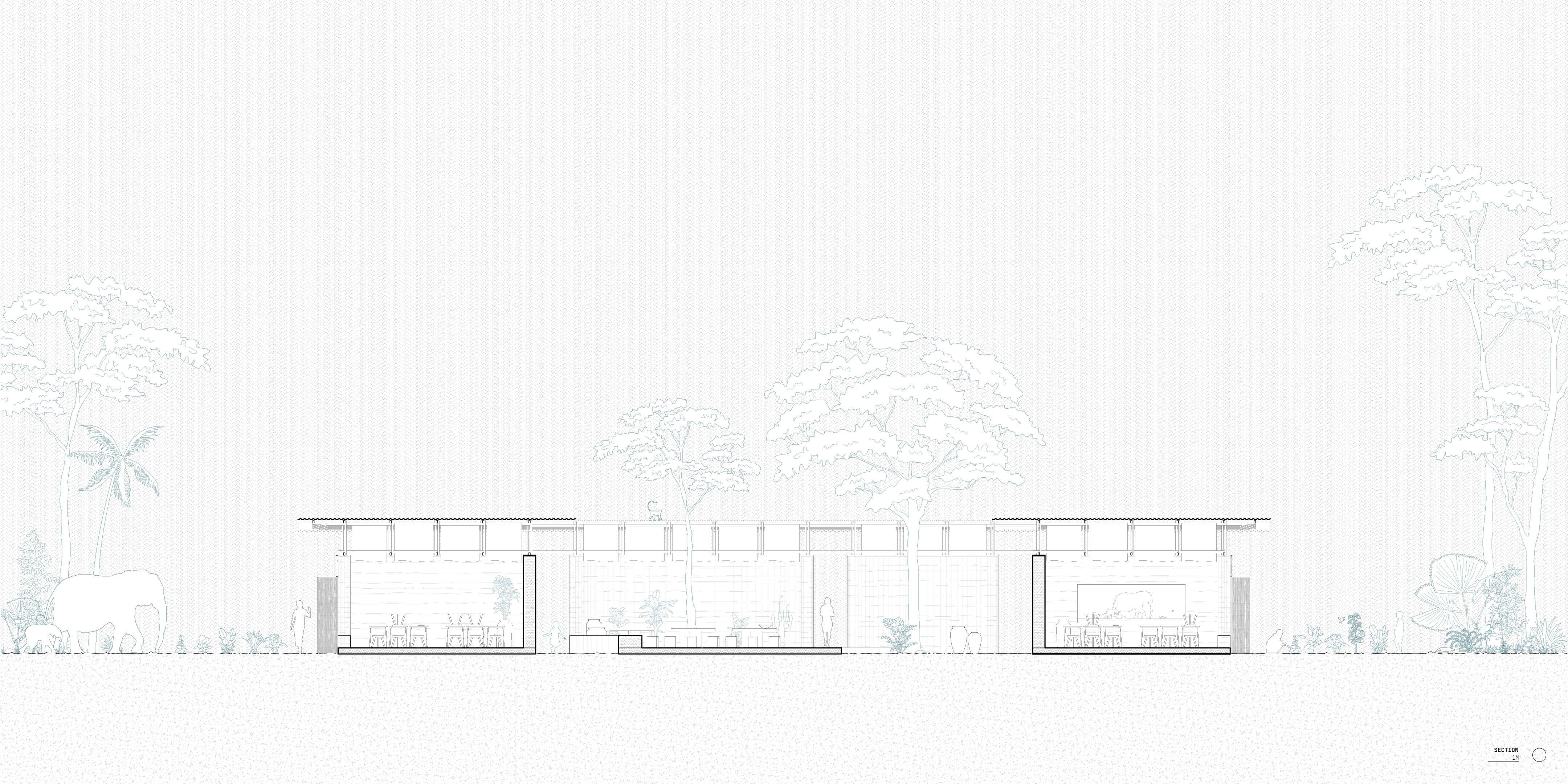
Based on these principles, the program is distributed into three main pieces: two orthogonal bars that house the classrooms and define the project’s perimeter, and a third central piece —of fluid geometry— that holds the remaining spaces: the “amoeba”. This volume expands and contracts strategically to generate courtyards, entrances and transitional spaces; it is through this piece that the building comes to life, enabling the new proposed activities. A fourth piece complements the system: the roof. Conceived as a timber grid, it not only provides shade but also organizes movement throughout the project and dissolves the boundary between interior and exterior. Classrooms can extend into the gardens, the dining room can become a plaza, and the courtyards can adapt to multiple uses. In this way, the proposal embraces versatility and flexibility as tools to foster community life. Inspired by the passive ventilation towers documented by Bernard Rudofsky in Architecture Without Architects, the roof integrates Senegalese fabrics stretched over the grid to enable passive cooling. Positioned diagonally, they capture the fresh southwesterly winds from the Atlantic and help deflect the Harmattan, the hot, dry wind that blows from the Sahara. The result is an air chamber that keeps interior spaces cool without relying on mechanical systems.
Material selection prioritizes local, durable and low-cost resources. The project is built with three essential elements: slab, wall and roof. The floor uses a compacted cement-and-sand mixture, common in the region and highly resistant. The walls are constructed from rammed red earth placed over stone foundations and reinforced concrete plinths, strengthened by a vertical metal structure anchored to the footing and bolted to a timber top plate. This material —abundant, simple and thermally efficient— becomes the constructive backbone of the building. The roof is supported by palorrosa beams, a dense and resilient local wood that enables the formation of a structural grid. Corrugated metal sheets are installed above to withstand heavy rains, while stretched fabrics regulate the microclimate and complete the passive ventilation system. To facilitate construction with local labor, the building is laid out on a 1.5 × 1.5 meter grid, allowing for repetitive modules and simplifying assembly without oversized elements. Any additional interior partitions can be created using fabric curtains hung from the structural grid. Optionally, wooden panels with cane frames (0.75 × 2.4 m) may be installed to close openings when needed.
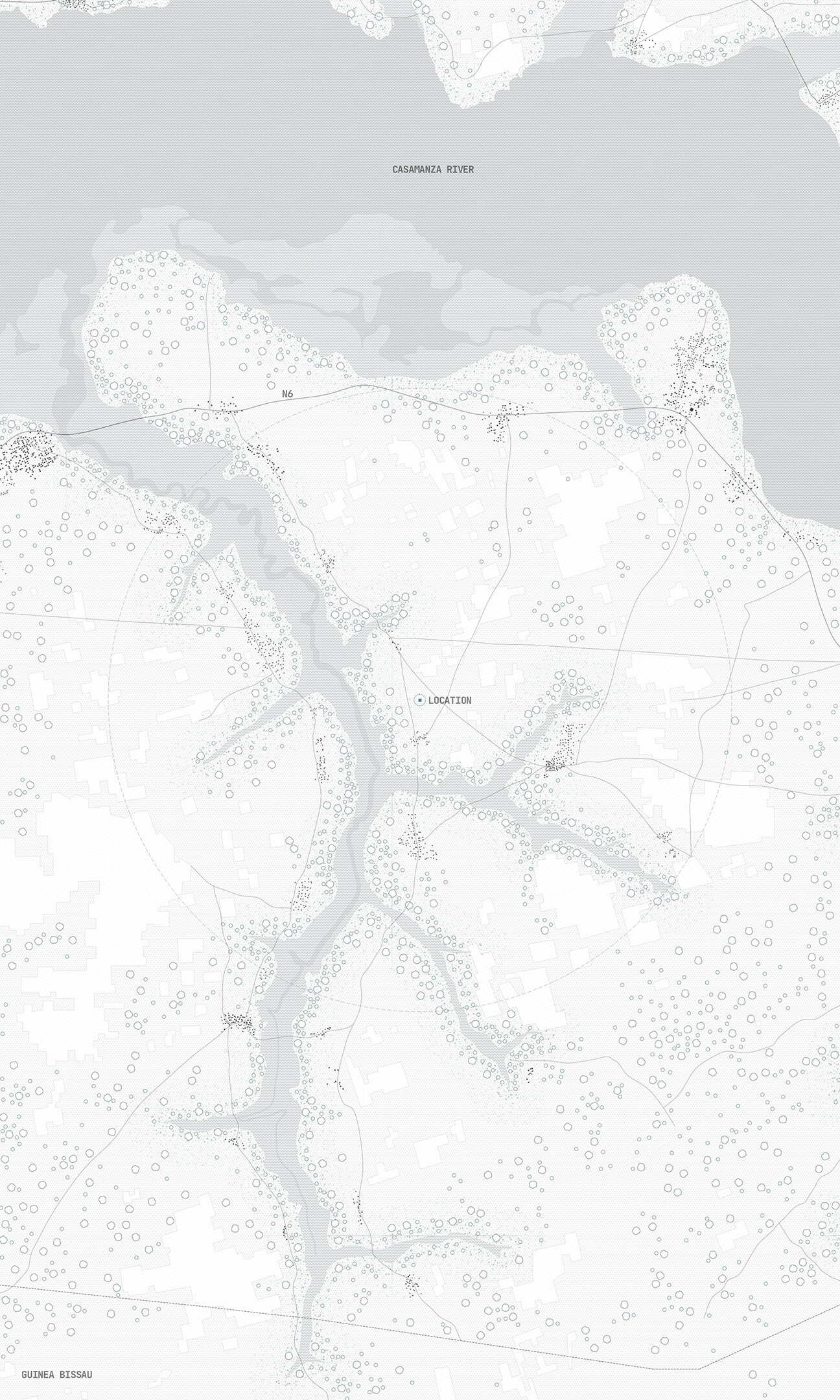
Finally, the site selection was based on a territorial analysis integrating three variables: population density, proximity to the national road N6 (5 km, the maximum walkable distance), and the presence of local paths. With these criteria, an optimal area was identified between Darsilam and Sedioudi, combining accessibility, natural landscape and potential for immediate social impact.
| YEAR | 2023 |
| LOCATION | Casamance – Senegal |
| TYPOLOGY | Education |
| AREA | 662.00 M² |
| CLIENT | Balouo Salo |
| AUTHORS | 404 ARQUITECTURA |
| TEAM | Israel Ascarruz Diego Bullón Diego Hernández Alonso Melgar Claudia Romero |
| CINEMATOGRAPHY | Alonso Castillo (script) Gonzalo Vera Tudela (direction) |
| STATUS | Delivered |
| RECOGNITIONS | Honourable Mention |


